
Case studies
Real optical systems designed with etendue, filtered by feature, engine or application.
No case study matches these filters.
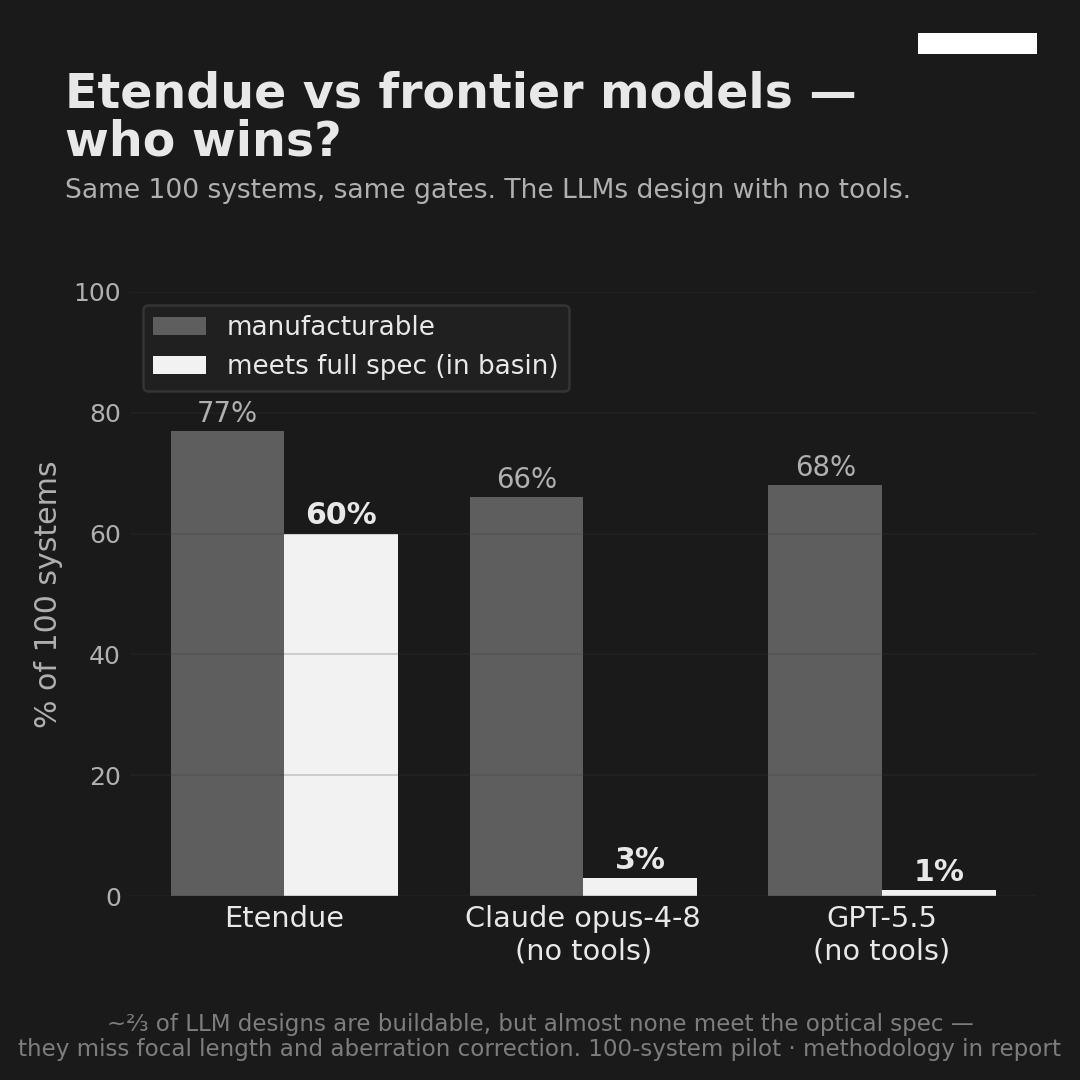
Automated optical design - AI-generated starting points
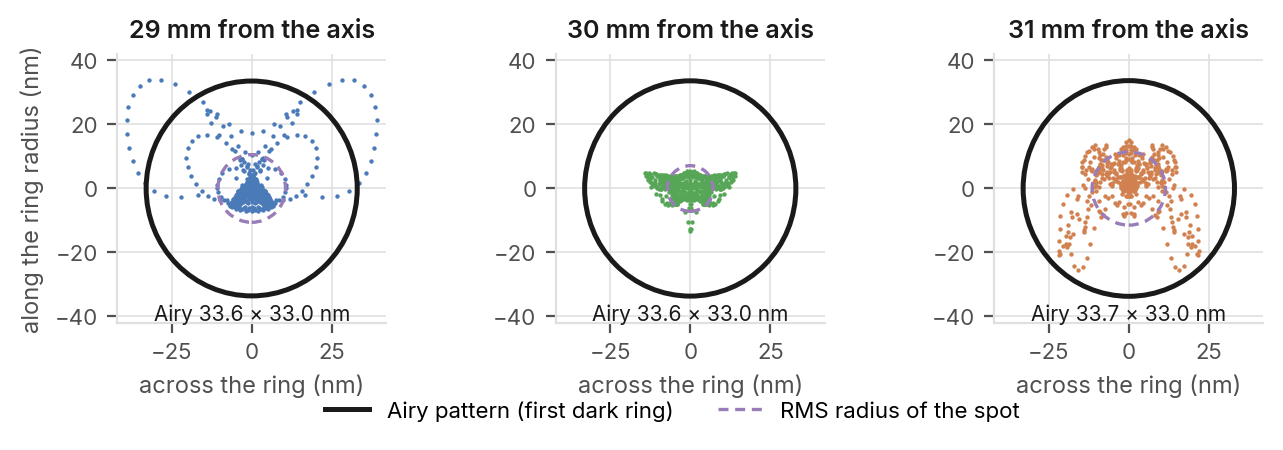
Six-mirror EUV projection objective: aperture on the ring field, image quality and light budget
Four-times reduction, image-side NA 0.25, 13.4 nm, six aspheric mirrors after patent US 6,188,513
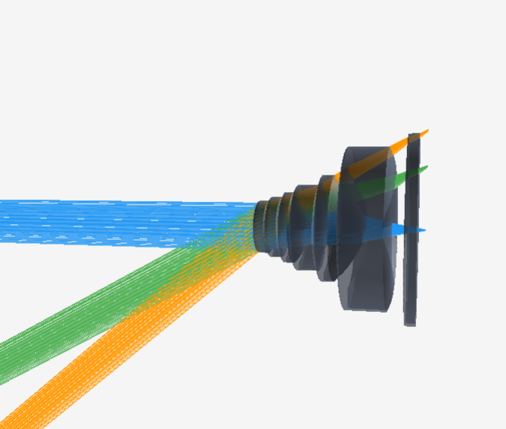
Benchmark: Smartphone lens part 1
Asphere spot diagram & MTF
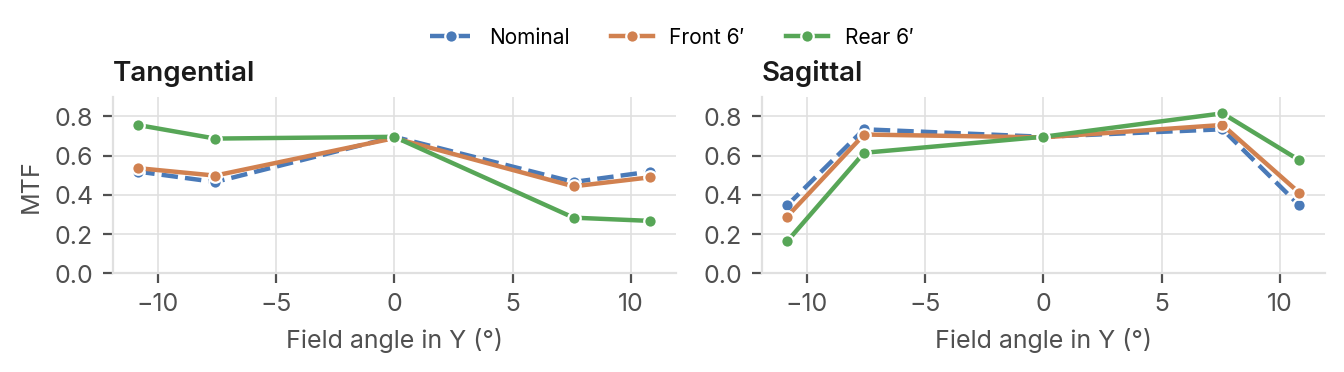
Image contrast of a 36 mm f/2 imaging lens with imposed group tilts
Eleven-lens objective of patent US 8,879,901, three lens groups, 12 variants, polychromatic MTF at 50 cycles/mm

.zmx file import and quality analysis
Auto import and AI generated workflow
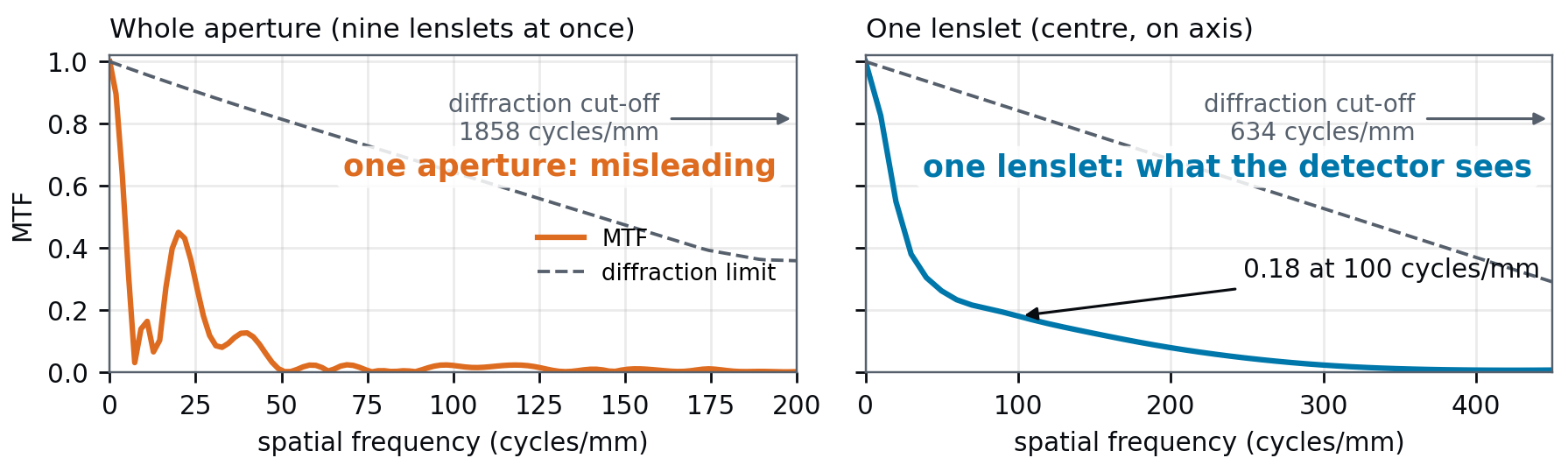
Designing a microlens array imager: per-lenslet image quality, crosstalk and manufacturing data
3 × 3 lens array, 1 mm pitch, re-imaged onto a detector by a 1:1 relay at 550 nm
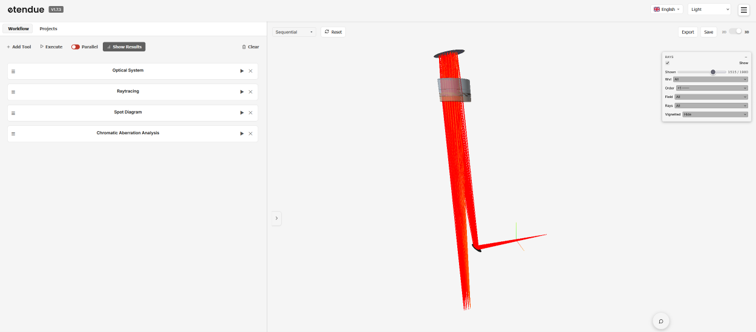
Benchmark Visible Littrow spectrograph
From the optical layout to spectral dispersion
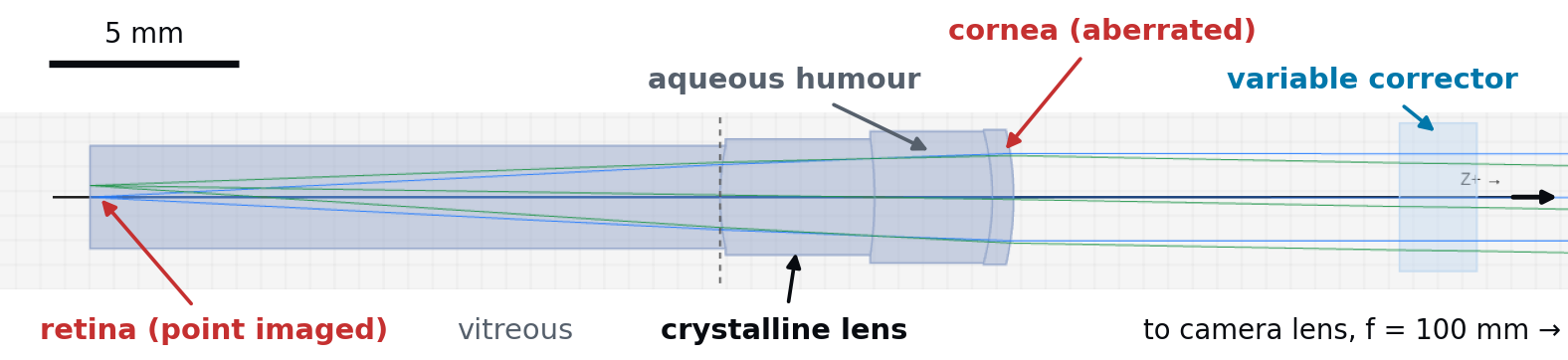
Correcting the aberrations of the eye in a retinal imager with a variable Zernike corrector
Schematic eye with an aberrated cornea, 3 mm pupil, 840 nm; corrector plate with 12 Zernike terms; ICNIRP exposure check
Feature presentation
AI assistant and sequential optimization.
Lens analysis over multiple fields
We ask the AI to create a lens design and evaluate the quality
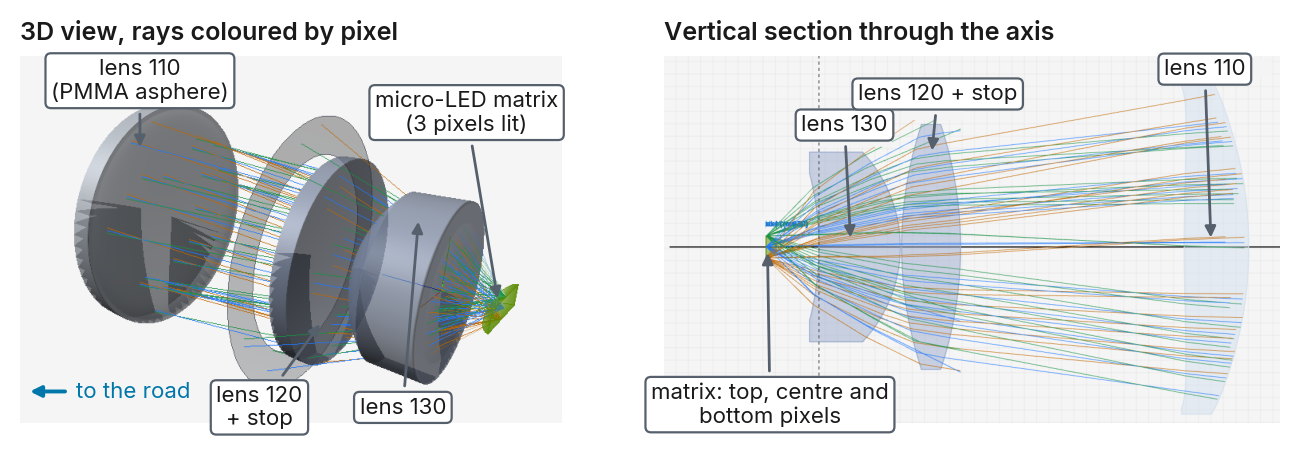
Projecting a micro-LED matrix headlamp: beam intensity, pixel separation and the dark zone around an oncoming car
256 × 64 pixels on a 50 µm pitch, imaged by the three-lens projection lens of patent US 11428378 (f = 30.4 mm, f/0.67), judged against UN Regulation No. 149
Laser cavity stability analysis
A custom plugin made from the API and more.
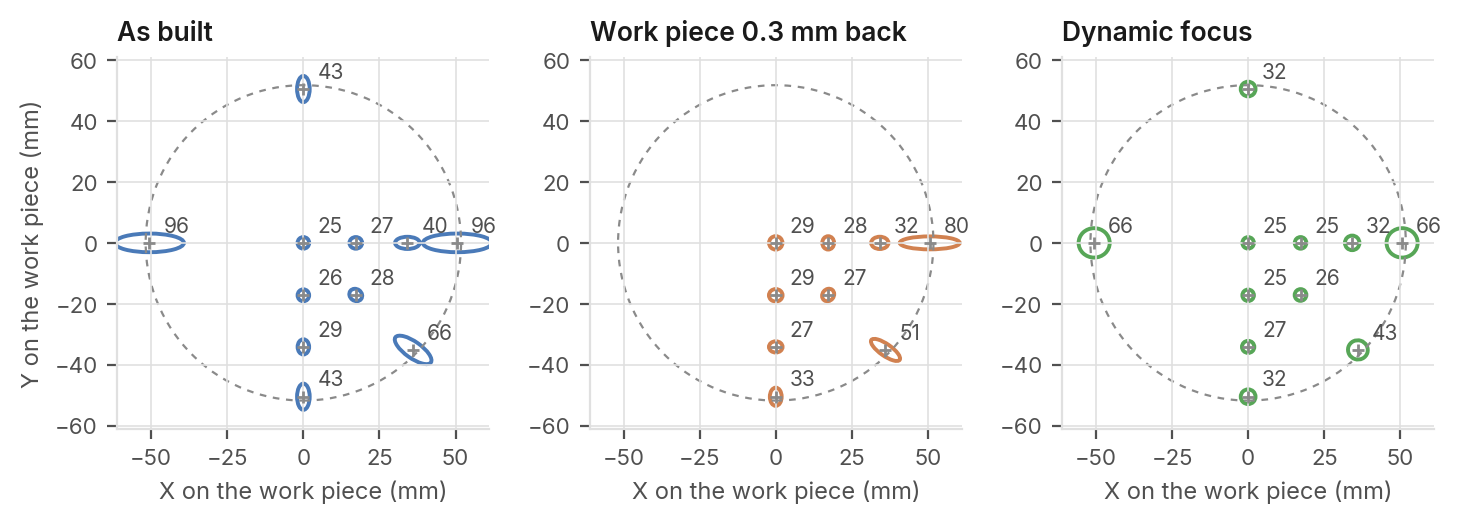
Spot size and shape across the field of a galvo scanner with a telecentric F-theta lens
80 W femtosecond laser at 1030 nm, two-axis galvo head, ±18° scan field
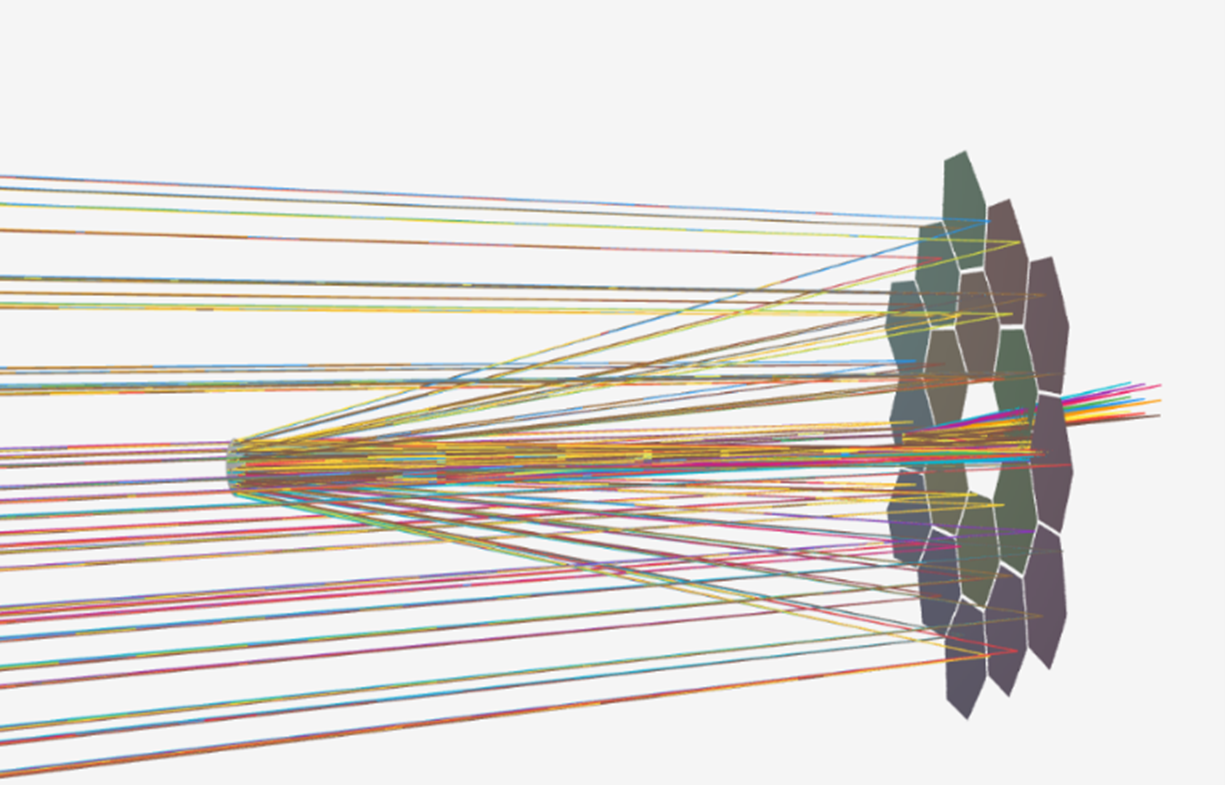
Benchmark : James Webb Space Telescope
Optimization and spot diagram
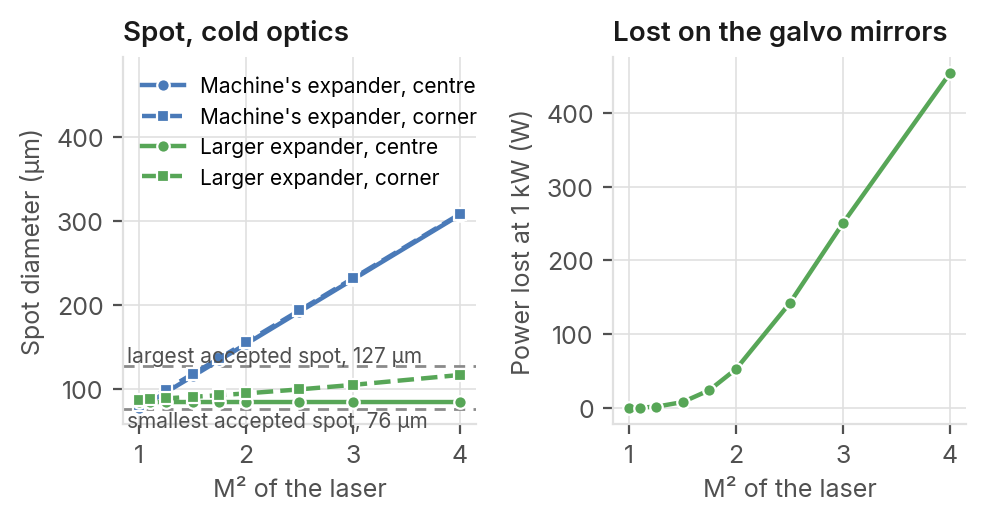
Integrating lower-quality fibre lasers in an LPBF machine: spot size at the powder bed
1 kW fibre laser at 1070 nm, two-axis galvo head and F-theta lens, 250 × 250 mm build plate
MEETOPTICS and etendue partnership presentation
Import standard components from MEETOPTICS catalogue directly into etendue's design interface!
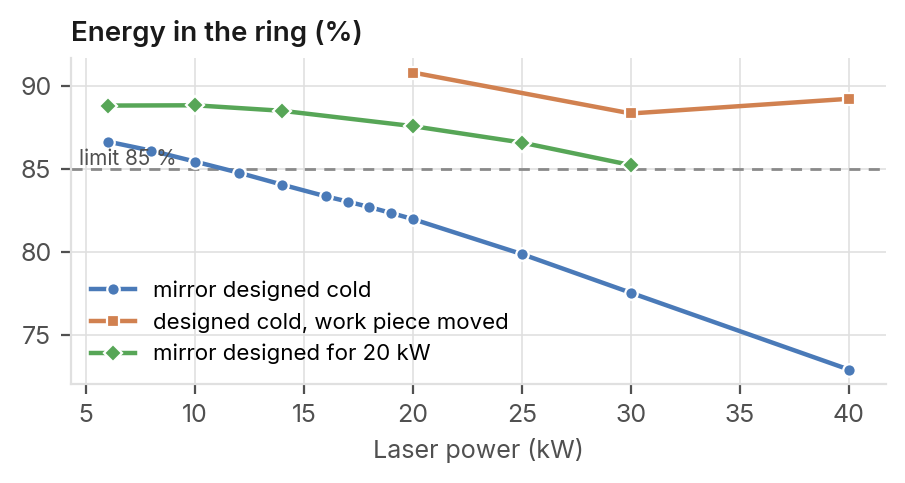
Thermal limits of a freeform ring-shaping head for a multimode fibre laser
Laser welding head at 1030 nm, ring of 3 / 2 mm diameter, laser power from 6 kW to 40 kW
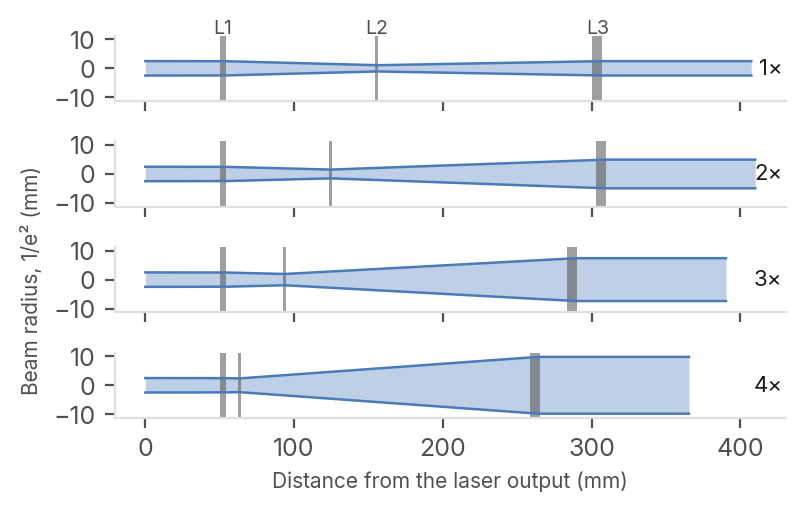
Collimation and thermal lens of a 1×–4× zoom beam expander at 1 kW
Galilean zoom with three fused-silica lenses, four zoom positions optimized together, 1030 nm continuous laser from 100 W to 1 kW
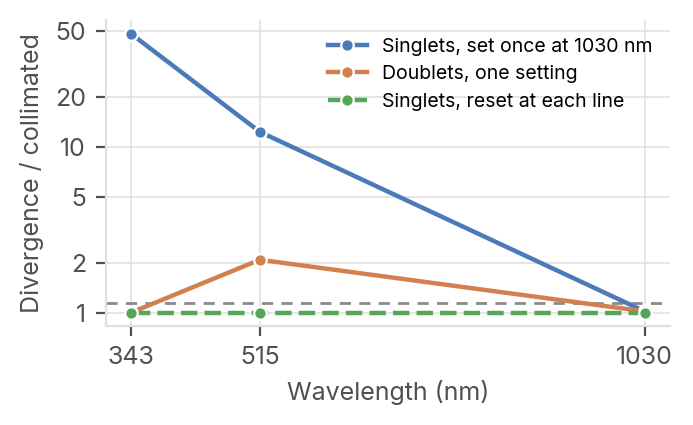
Lens spacing of a 3× beam expander used at 1030, 515 and 343 nm
Fused-silica singlets against CaF2 / fused-silica doublets for the three harmonics of a Yb laser, with the collimation read on the Gaussian beam at each line
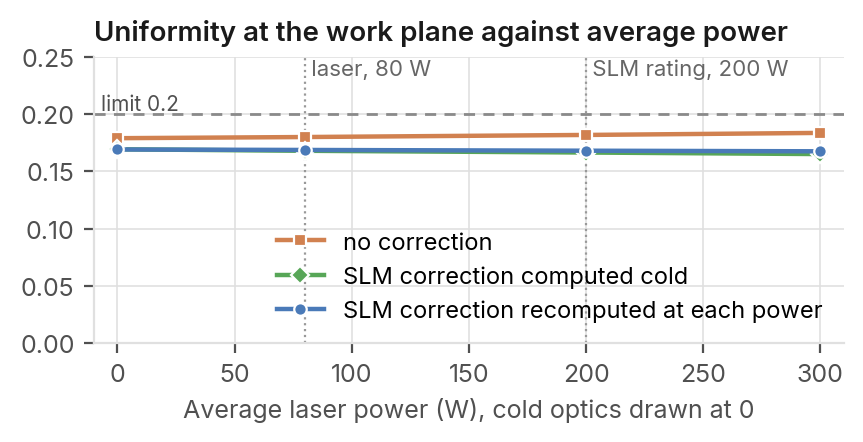
Square top-hat from a femtosecond laser with a phase-only LCOS SLM
80 W femtosecond laser at 1030 nm, 300 µm square top-hat, average power from 0 to 300 W
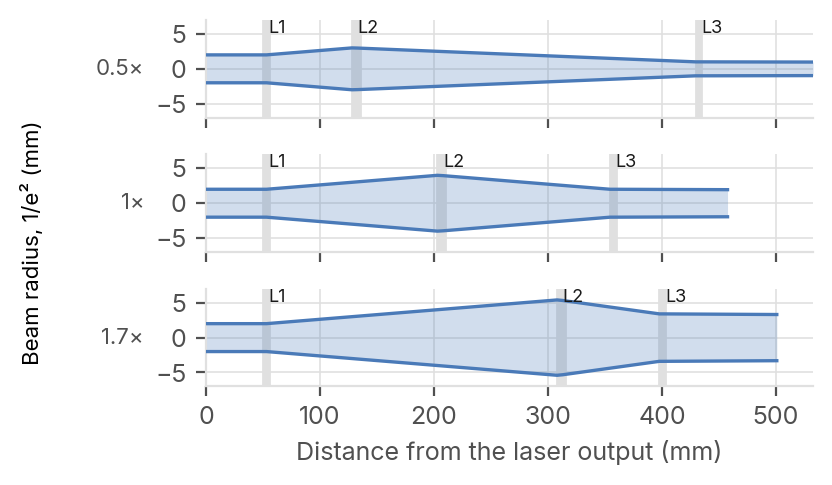
B-integral and pulse duration in a 0.5× to 1.7× ultrafast zoom beam expander
Three-lens Galilean zoom behind a 1030 nm femtosecond laser, 7 variants, pulse propagated through the real system at each position
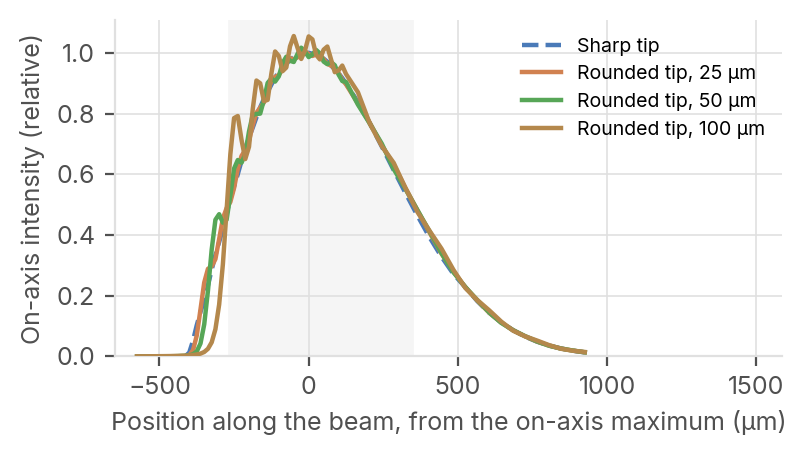
Core size, zone length and axicon tip tolerance of a Bessel beam shaper for glass cutting
Ultrashort-pulse laser at 1030 nm, fused-silica axicon and a reducing telescope, after Balage et al.; wave-optics field computed plane by plane along the Bessel zone
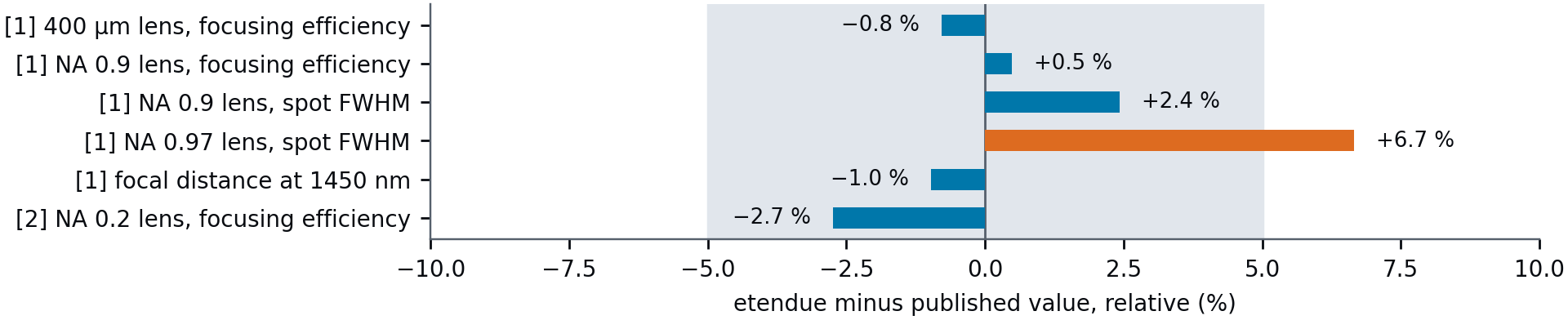
Metalens modelling in etendue reproduces published focusing efficiencies, spot sizes and focal shifts
Two published metalenses recomputed from their nanostructure: amorphous-silicon posts at 1550 nm and silicon-nitride posts at 550 nm
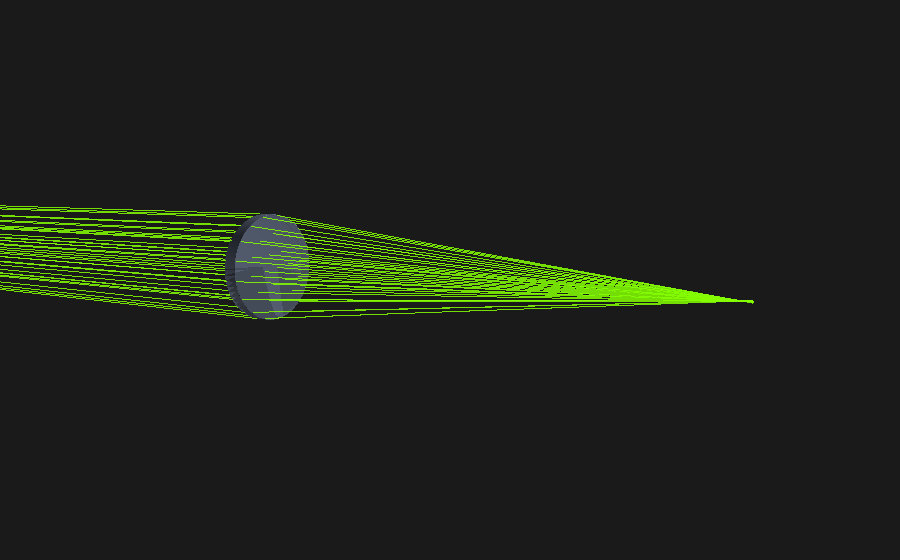
Thermal focus drift of a glass lens, checked against published glass data
N-BK7 plano-convex lens, f = 100 mm at f/4, three wavelengths, −40 to +80 °C, two mount materials
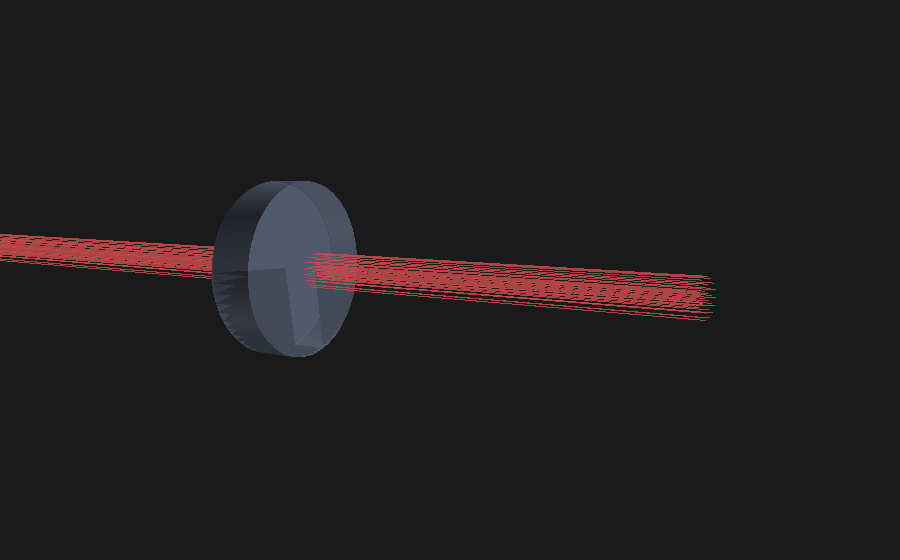
Thermal lens of a laser-heated fused-silica element, checked against analytical solutions
1000 W Gaussian beam at 1064 nm, steady state, heat absorbed in the bulk or in a coating
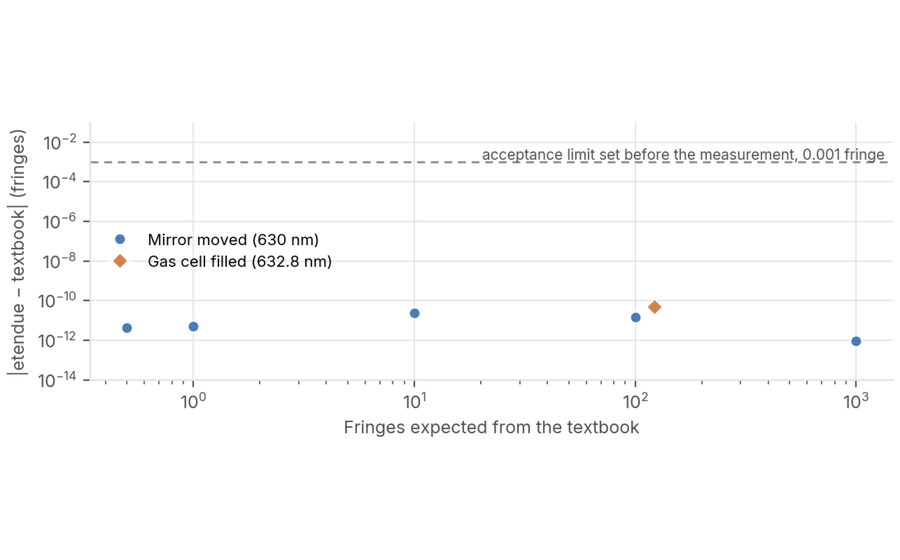
Path difference and fringe count in a Michelson interferometer
The etendue non-sequential ray tracer compared with the worked examples of OpenStax University Physics, volume 3, section 3.6
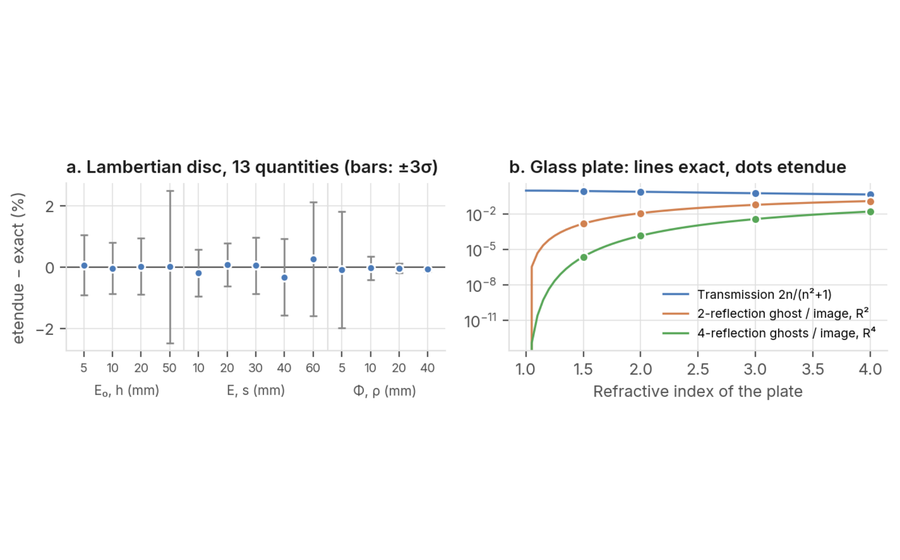
Irradiance of a Lambertian source and ghost reflections of a glass plate
The etendue non-sequential ray tracer compared with exact radiometric view factors and with the Fresnel reflectance at normal incidence
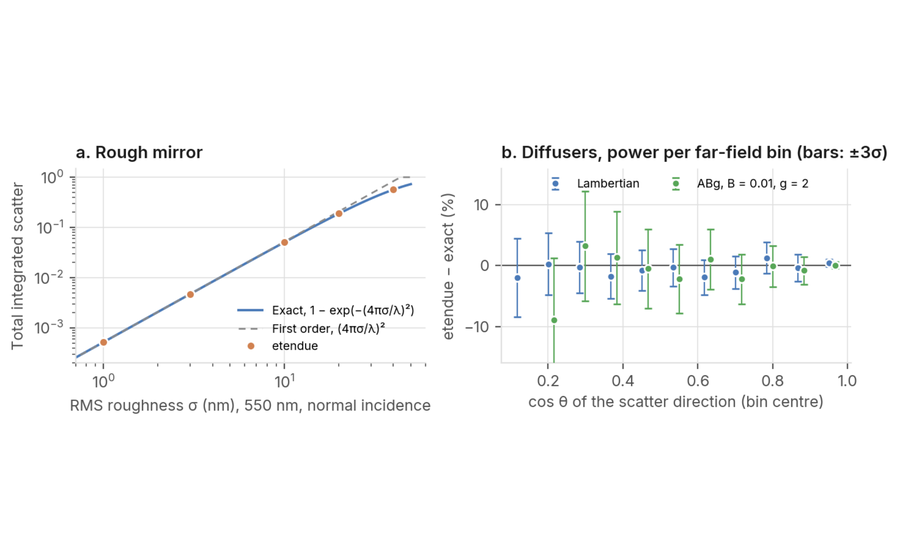
Total integrated scatter of a rough mirror, and Lambertian and ABg diffusers
The etendue non-sequential ray tracer compared with the Davies and Bennett-Porteus scatter law, the Lambertian view factors and the integral of the ABg model
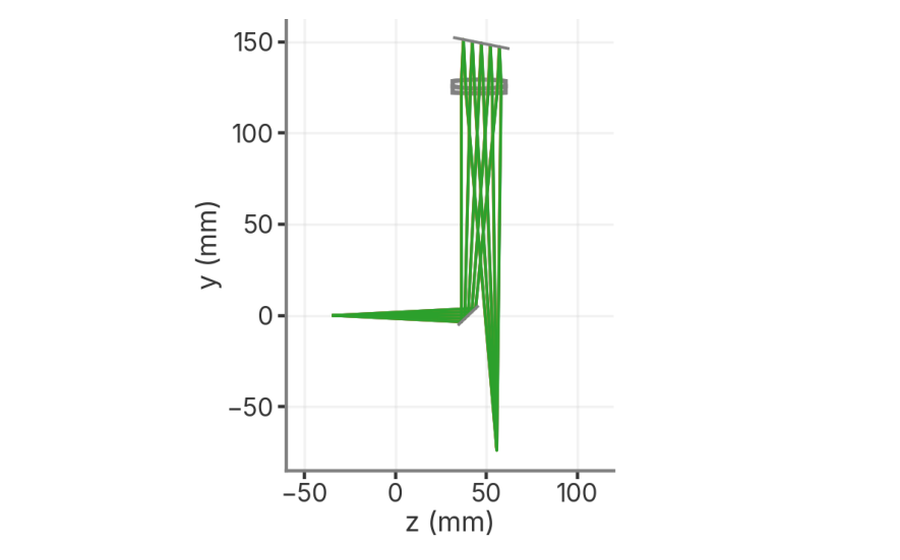
Ray tracing of a 600 lines/mm Littrow spectrograph against the grating equation
Plane reflection grating, 200 mm achromatic doublet used twice, 625 to 680 nm
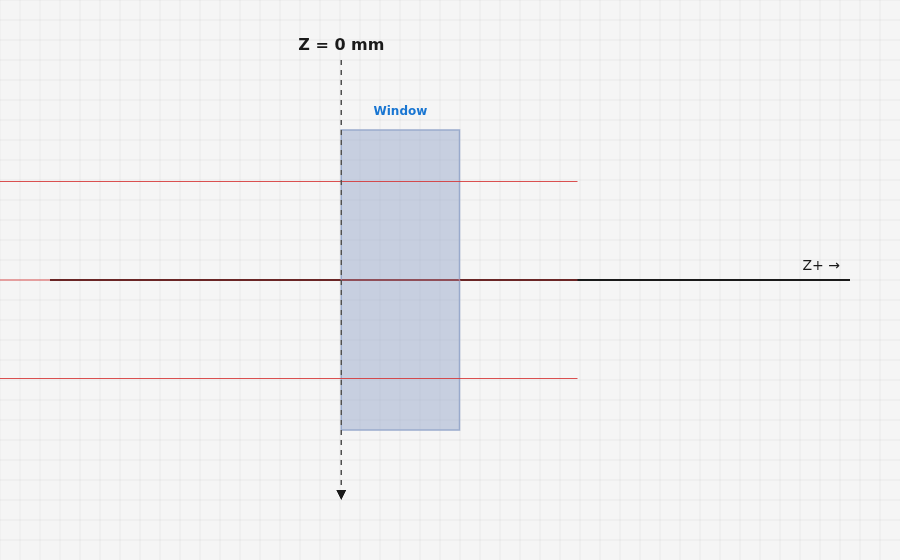
Femtosecond pulse in a glass window
Dispersion, B-integral and Kerr lens against published data
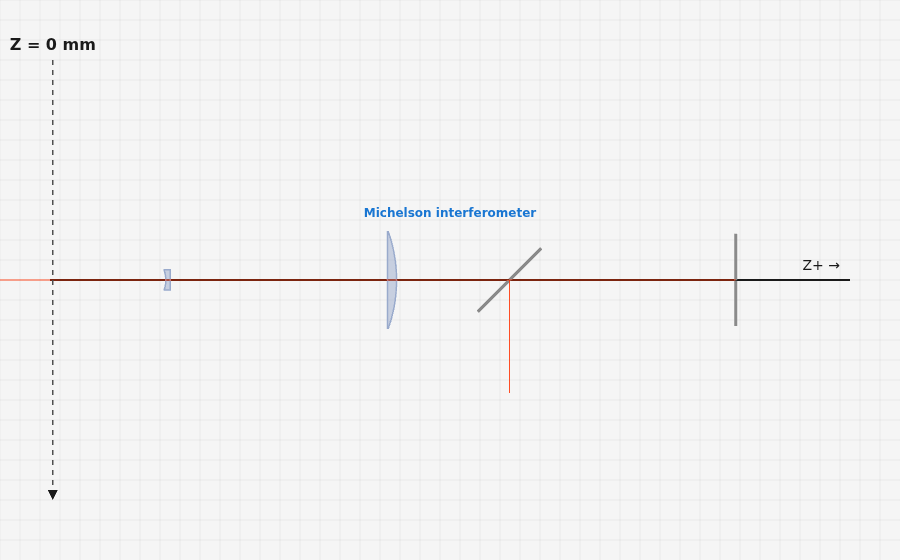
Michelson and Mach-Zehnder interferometers
Fringes, visibility and coherence against textbook results
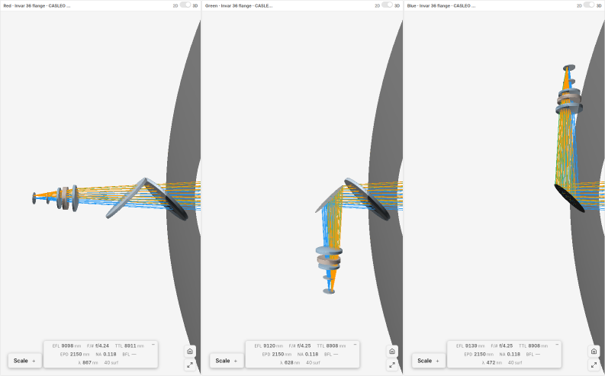
Athermalising a three-channel camera: focus drift by channel, flange material and temperature gradient
Cassegrain telescope with a 2.15 m entrance pupil, split by two dichroic plates into three cameras from 360 to 1 000 nm, f/4.25, operated from −11 to 32 °C
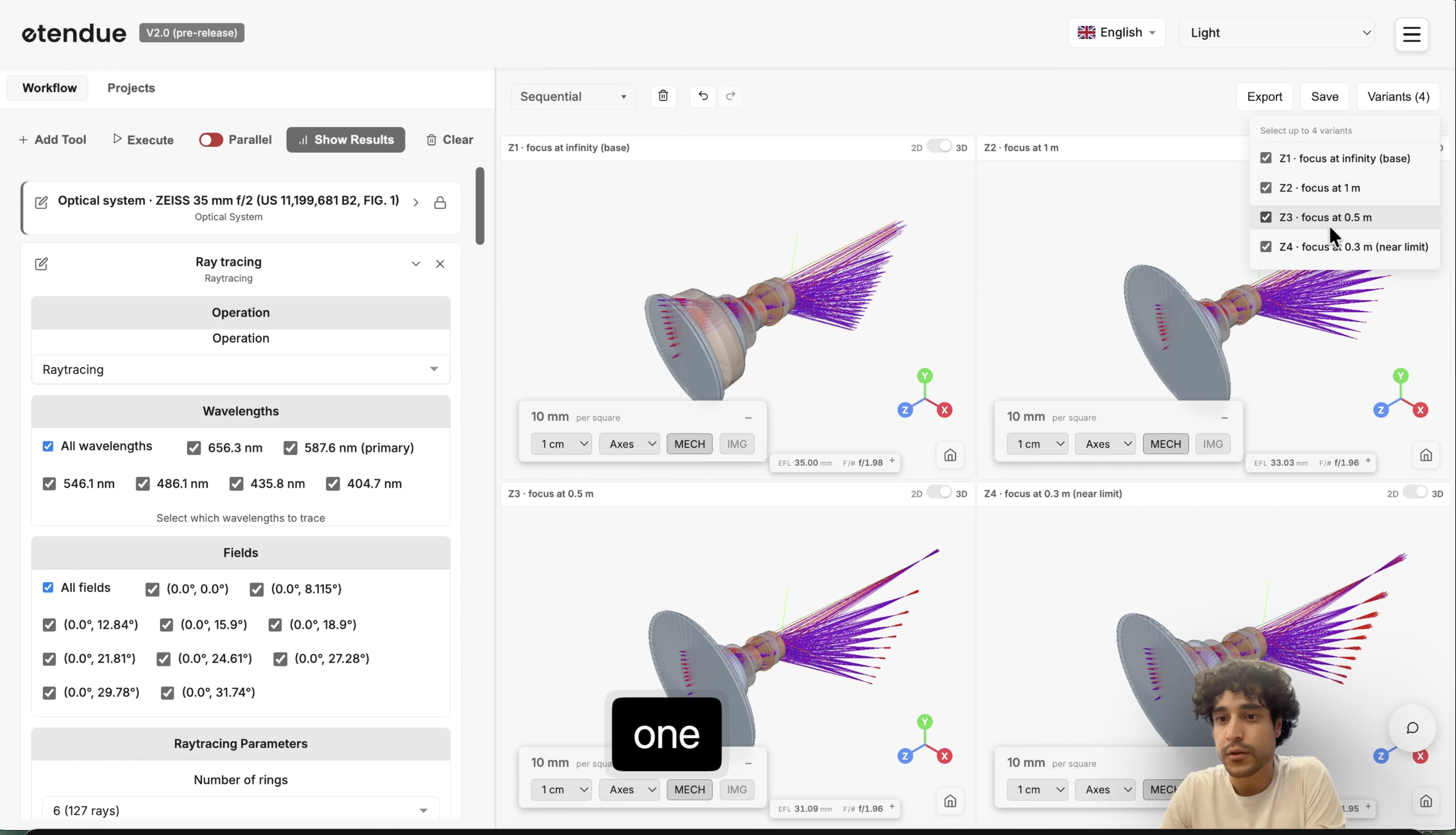
Rebuild a ZEISS 35 mm f/2 lens in etendue.io with Claude via MCP (Part 1)
A full-frame 35 mm f/2 camera lens with 8 elements, two bi-aspheric lenses and an internal focusing group, rebuilt from ZEISS patent US 11,199,681 B2 by an AI model connected to etendue through its MCP server
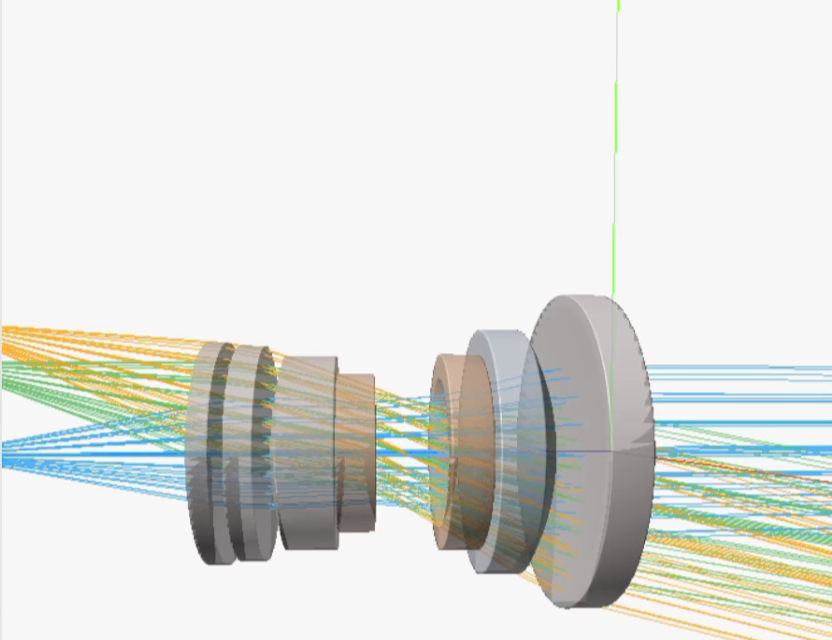
Generating seeds for a 16 mm machine vision lens with etendue's Seed Generator
A 16 mm f/2.8 lens with a 28° field of view: a manufacturable starting point in a few minutes, from a plain-language description